These are the places in the world where internet access is still an issue – and why

(Crredit: Unsplash)

This article is brought to you thanks to the collaboration of The European Sting with the World Economic Forum.

Author: Douglas Broom, Senior Writer, Forum Agenda


  • The EDISON Alliance says internet access is “foundational” to achieving the UN Sustainable Development Goals.
  • Yet only 35% of people in developing nations have any form of online access.
  • And even in developed nations like the United States, connectivity varies across demographics.

For some people in the developed world, life without access to the internet is unthinkable. But for almost 3 billion others, who mostly live in developing nations, living offline is a daily reality.

In a world where so much is done online, from banking to voting, being on the wrong side of the digital divide is to be cut off from health, education, social networks and opportunities to access services that half the world takes for granted.

“Internet access is not a luxury, but a basic necessity for economic and human development in both developed and developing countries,” the World Bank says.

As well as enabling access to education and healthcare, digital connectivity supports women’s empowerment and environmental sustainability, and enhances government transparency and accountability, the Bank adds. It also develops communities, both local and global.

Only 35% of people in developing nations have access to the internet compared to over 80% in the developed world. The Bank says raising access to 75% would boost the developing world’s collective GDP by $2 trillion and create 140 million new jobs.

Tackling digital exclusion

The World Economic Forum founded the EDISON Alliance to accelerate action to tackle the issue of digital exclusion. Comprising 50 global leaders from public and private sectors, it is supporting action on health, education and financial inclusion.

The Alliance focuses on three factors that can help to increase internet usage across the world: affordability; usability and digital literacy; and accessibility – members work with governments to expand internet infrastructure in underserved areas.

Describing internet connection as “foundational” to the achievement of the United Nations’ Sustainable Development Goals, the Alliance’s aim is to foster affordable and accessible digital opportunities for everyone by 2025.

Discover

How is the World Economic Forum fostering a sustainable and inclusive digital economy?

The World Economic Forum’s Platform for Shaping the Future of Digital Economy and New Value Creationhelps companies and governments leverage technology to develop digitally-driven business models that ensure growth and equity for an inclusive and sustainable economy.

  • The Digital Transformation for Long-Term Growth programme is bringing together industry leaders, innovators, experts and policymakers to accelerate new digital business models that create the sustainable and resilient industries of tomorrow.
  • The Forum’s EDISON Alliance is mobilizing leaders from across sectors to accelerate digital inclusion. Its 1 Billion Lives Challenge harnesses cross-sector commitments and action to improve people’s lives through affordable access to digital solutions in education, healthcare, and financial services by 2025.

Contact us for more information on how to get involved.

Globally, internet usage was boosted during the COVID-19 pandemic, according to data from the United Nations’ International Telecommunication Union (ITU), with usage growing 11% globally and by 15% in low and middle-income countries in 2020.

By the end of 2022, ITU says 5.3 billion people – two-thirds of the world’s population – had access to the internet. A significant part of this growth was driven by pandemic quarantine measures which forced people to use videoconferencing for work and education.

Global digital divide

At the same time, the pandemic highlighted the consequences of the digital divide. Despite a fall in the cost of internet connections globally, the hit to incomes from the pandemic made it harder for the least well-off to access remote healthcare and other public services.

Gender inequality in online access persists, although the situation has improved. The ITU’s data shows that, globally, 69% of men used the internet in 2022 compared to 64% of women – although the gender gap has been closed in developed nations and the Americas, it says.

United States

But even in the United States there are marked variations among internet users. A quarter of Americans aged over 65, surveyed by Pew Research, said they had never been online compared to just 1% of 18-29 year olds.

Among people whose education stopped after high school, 14% were offline and women were marginally less likely than men to use the web. One in ten rural dwellers were offline compared to 6% in the suburbs and 5% in urban areas.

Europe

In Europe, 2.4% of people are unable to afford an internet connection, according to data from the European Union. But among those at risk of poverty, the digital exclusion rate was 7.6%, although both figures represented an improvement on 2021.

However the headline numbers mask wide variations across the EU, with internet connections out of reach financially for a quarter of the least well-off in Romania and a fifth in Bulgaria compared to just 1% in Denmark and Finland.

Africa

The cost of installing internet infrastructure led to the rapid growth of mobile internet connections in Africa, according to the UN. But although the pandemic boosted take-up, only around 29% of people in sub-Saharan Africa are connected to mobile internet.

Although one in five people live in an area with no mobile internet coverage – 210 million people – take-up in areas where it is available is still low at 53%, a figure industry body GSMA blames on the affordability of smartphones.

https://cdn.jwplayer.com/players/5we6VG80-ncRE1zO6.html

Asia

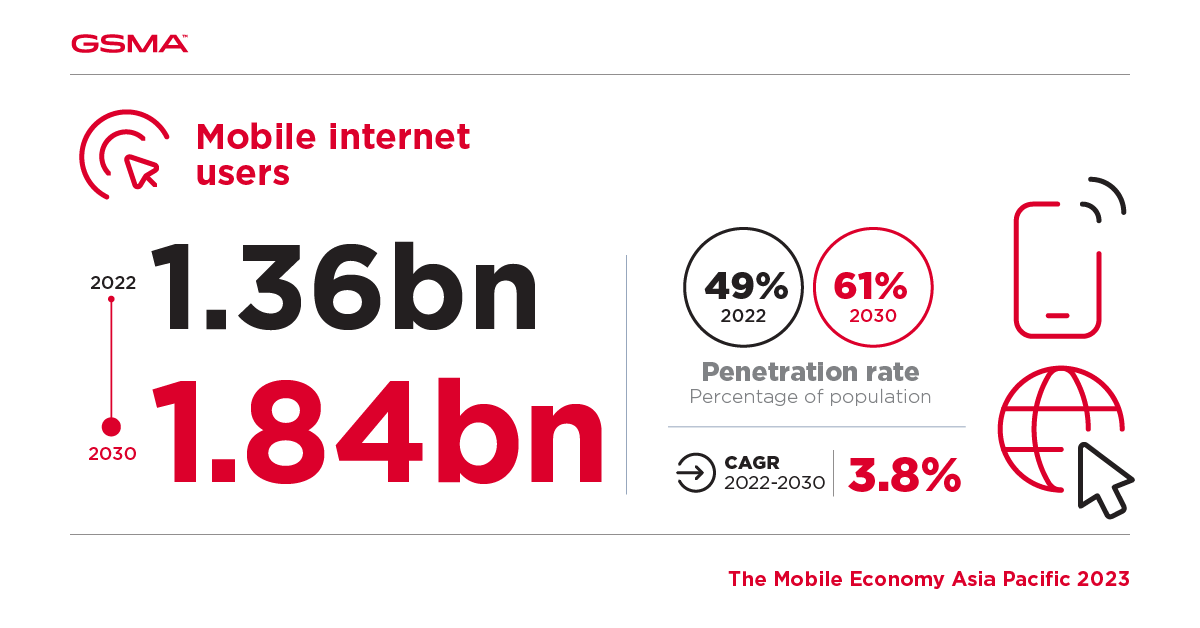
Overall internet connectivity in the East Asia Pacific region is higher with 70% of the population able to access online services, according to World Bank data. But adoption of mobile internet is lower at 49% although predicted to grow to almost two-thirds by 2030.

GSMA forecasts that the rollout of the 5G network will add $130 billion to the region’s GDP by 2030. And, in China, which has the world’s greatest number of fixed line internet users, according to Global Data, new connections increased 13% in 2021.


Discover more from The European Sting - Critical News & Insights on European Politics, Economy, Foreign Affairs, Business & Technology - europeansting.com

Subscribe to get the latest posts sent to your email.

Interesting reads

UN News A popular market in Khan Younis, southern Gaza Strip.

Economic collapse pushes highly educated Gazans into the ‘survival economy’

This article is published in association with United Nations. Young Palestinians in Gaza with university-level educations are setting aside dreams of putting their hard-won skills into practice and doing whatever they can to survive.  Abdullah al-Khawaja, an electrical engineering graduate displaced from Rafah to Khan Younis, now stands behind a small spice stall, having lost the […]
MONUSCO/Didier Vignon Dossou-Gbakon MONUSCO peacekeepers protect civilians in Ituri, eastern DRC.

World News in Brief: AI diagnostics, humanitarian deal for DR Congo, rights abuse allegations in Belarus, Ukraine children bear heaviest burden

This article is published in association with United Nations. New data shows that nearly three in four countries in Europe now use Artificial Intelligence in their health services to make a diagnosis. According to the UN World Health Organization (WHO) joint report with the European Union, 74% of countries in the bloc use AI tools in medical […]
© WFP The conflict in the Middle East is impacting the cost of food in many parts of the world.

Time running out on development goals as finance dries up, UN warns

This article is published in association with United Nations. Rising conflicts, the climate crisis and shrinking development finance are putting growing pressure on the poorest and most vulnerable countries – pushing development goals further off track. The warning comes in the Financing for Sustainable Development Report 2026 (FSDR), a new UN report launched on Monday, which finds […]
Ukraine’s women at breaking point after four years of war as attacks on energy, healthcare continue – UN humanitarians

World News in Brief: Myanmar amnesty, rising needs in Afghanistan, another power loss at Ukraine nuclear plant

This article is published in association with United Nations. Authorities in Myanmar released the country’s ousted president from prison on Friday, along with some 4,000 other people, as part of an amnesty to mark the traditional New Year festival. President Win Myint had been in jail since February 2021 when the military overthrew Myanmar’s democratically elected […]
UN Photo/Eskinder Debebe Siobhán Mullally, Special Rapporteur on Trafficking in Persons, especially women and children, one of the UN independent human rights experts calling for more accountability for the alleged trafficking victims in the Epstein files.

The Epstein files: Rights experts demand accountability, call for probe into trafficking allegations

This article is published in association with United Nations. UN independent human rights experts called on Thursday for justice and accountability for young women and girls who were trafficked systematically as part of allegations contained in the so-called Epstein files. The Human Rights Council-appointed experts also issued a general warning over the “continuing violence of patriarchal power systems” revealed […]
© World Bank A ship offloads its cargo at the port in Nuku'alofa, Tonga.

Middle East conflict chokes end of supply chain as lights go out in the Pacific

This article is published in association with United Nations. For Pacific Island countries, the Middle East crisis is not a distant geopolitical event. It is already showing up in higher fuel prices, electricity uncertainty and fears that communities sitting at the far end of global supply chains could be pushed into deeper economic insecurity. “We are […]
© UNICEF/Fouad Choufany The Basta neighbourhood in Beirut, Lebanon, lies in ruins.

‘Time for diplomacy over escalation’ in Middle East war: Guterres

This article is published in association with United Nations. As the war in the Middle East continues, the United Nations Secretary-General issued a passionate call for “serious negotiations” between the US and Iran to resume, warning that respect for international law “is being trampled” underfoot.  Addressing journalists at UN Headquarters in New York outside the Security […]
© IFAD/GMB Akash Prolonged disruptions to fuel and natural gas supplies could affect the global availability of fertilizers and impact crop yields. (file photo)

‘Clock is ticking’: Hormuz disruption raises fears of global food crisis

This article is published in association with United Nations. The clock is ticking for global food systems as disruptions in the Strait of Hormuz threaten to choke off the flow of fuel and crucial fertilizers needed for the next planting season – also raising the risk of higher food prices and a new wave of inflation.  […]
This article is published in association with United Nations.

Lebanon airstrike casualties ‘still under the rubble’ as ambulances, hospitals face new threats

This article is published in association with United Nations. With Lebanon still reeling from Israel’s devastating airstrikes on 8 April, UN humanitarians reported new fears of attacks on ambulances and looming food shortages in the south of the country on Friday. Speaking from Beirut, where he witnessed Wednesday’s attacks first-hand, the World Health Organization (WHO)’s representative […]
This article is published in association with United Nations.

Lebanon: Health system overwhelmed following a ‘horrific’ day of Israeli strikes

This article is published in association with United Nations. The scale and speed of destruction from the wave of airstrikes in Lebanon which began just hours after the US-Iran ceasefire announcement, has left the country’s already strained health system struggling to cope, according to the World Health Organization (WHO). WHO Representative in Lebanon Dr. Abdinasir Abubakar […]
© NASA/Jeff Schmaltz A satellite image shows the Strait of Hormuz. (far right)

Iran ceasefire raises hopes for reopening key Strait of Hormuz

This article is published in association with United Nations. The announcement of a shaky two-week ceasefire between the US and Iran, will it is hoped, lead to the opening of the strategically important Strait of Hormuz, a vital waterway through which one fifth of the world’s oil and gas passes. The strait has become a global […]
Fokah Wembe Darrell Dupray is a 4th-year medical student at Université des Montagnes, Bangangté Cameroon and a student leader within the Cameroon Medical Students’ Association (CAMSA).

Global Health Priorities for the Year Ahead: Why the Next Generation Must Lead

This article was exclusively written for The European Sting by Mr. Sharif Mohammed Sadat, a medical student from Bangladesh and serves as the Regional Director for Asia-Pacific of the International Federation of Medical Students’ Associations (IFMSA). He is affiliated with the International Federation of Medical Students Associations (IFMSA), cordial partner of The Sting. The opinions expressed in this […]
© IOM Families returning to Khartoum face the mounting task of rebuilding their lives and livelihoods amid damaged homes and limited access to basic services (file).

World News in Brief: ‘Skyrocketing’ needs outpace Sudan funding, Ukraine strikes update, global water security

This article is published in association with United Nations. The UN is significantly scaling up its presence in the Sudanese capital, Khartoum, to expand life-saving operations as the conflict between rival militaries approaches its third year. UN Resident and Humanitarian Coordinator Denise Brown has returned to the city with a core team, marking a renewed commitment […]
© UNHCR Smoke and debris from a building in the Bashura neighbourhood of Beirut, Lebanon, after an airstrike.

MIDDLE EAST LIVE 6 April: Strikes persist across region as humanitarian needs rise

This article is published in association with United Nations. Strikes and counter-strikes continue across the Middle East, with dozens of casualties reported over the weekend in Lebanon following Israeli strikes targeting the south and the capital, Beirut. Meanwhile, humanitarian needs are rising, critical infrastructure remains under strain, and the wider economic and global impacts of the […]
This article is published in association with United Nations.

UN nuclear agency chief ‘deeply concerned’ by reports of latest attack on Iran power plant

This article is published in association with United Nations. Reports of yet another projectile strike near the Bushehr nuclear power plant prompted Rafael Grossi, head of the International Atomic Energy Agency (IAEA), to register his deep concern on Saturday. The IAEA was informed of the strike – the fourth such incident in recent weeks – by […]
This article is published in association with United Nations.

Guterres warns of ‘wider war’ as Middle East conflict enters second month

The Middle East crisis has lurched into its second month, prompting UN Secretary-General António Guterres to issue a stark warning on Thursday morning that the world is “on the edge of a wider war” with catastrophic global implications. Speaking to the press outside the Security Council in New York, the UN chief painted a grim picture of the rapidly […]
This article is published in association with United Nations.

Middle East war: Energy crunch hits vulnerable nations

The war in the Middle East and the near halt to shipping in the Strait of Hormuz has amplified the energy crunch facing developing nations in Africa and South Asia that rely heavily on imported liquid gas, food and fertilizers.  And with Brent Crude still trading at more than $100 per barrel, many workers and households have reverted to […]
© WHO UN officials in Cyprus oversee the loading of emergency humanitarian supplies for Gaza.

Breaking the Gaza aid bottleneck: 106-tonne delivery arrives via new sea route

This article is published in association with United Nations. The World Health Organization (WHO) has facilitated the delivery of some 106 metric tonnes of lifesaving nutrition supplies to the Gaza Strip – the first shipment via a mechanism to deliver aid by sea, in line with a UN Security Council resolution and amid the ongoing war […]
© IMO Crew members take a break on a ship. (file)

‘No precedent’ for seafarers caught in war zone in post-WW2 era

This article is published in association with United Nations. Some 20,000 seafarers remain stranded on ships in the Strait of Hormuz as the war in the Middle East continues, a situation which has been described as unprecedented in the post-Second World War era. The seafarers are working on some 2,000 ships including oil and gas tankers, […]

Why don't you drop your comment here?

Go back up

Discover more from The European Sting - Critical News & Insights on European Politics, Economy, Foreign Affairs, Business & Technology - europeansting.com

Subscribe now to keep reading and get access to the full archive.

Continue reading

Discover more from The European Sting - Critical News & Insights on European Politics, Economy, Foreign Affairs, Business & Technology - europeansting.com

Subscribe now to keep reading and get access to the full archive.

Continue reading

The European Sting – Critical News & Insights on European Politics, Economy, Foreign Affairs, Business & Technology – europeansting.com

